Fairmont Le Château Frontenac: The Hotel That Towers Over Québec City and the St. Lawrence River
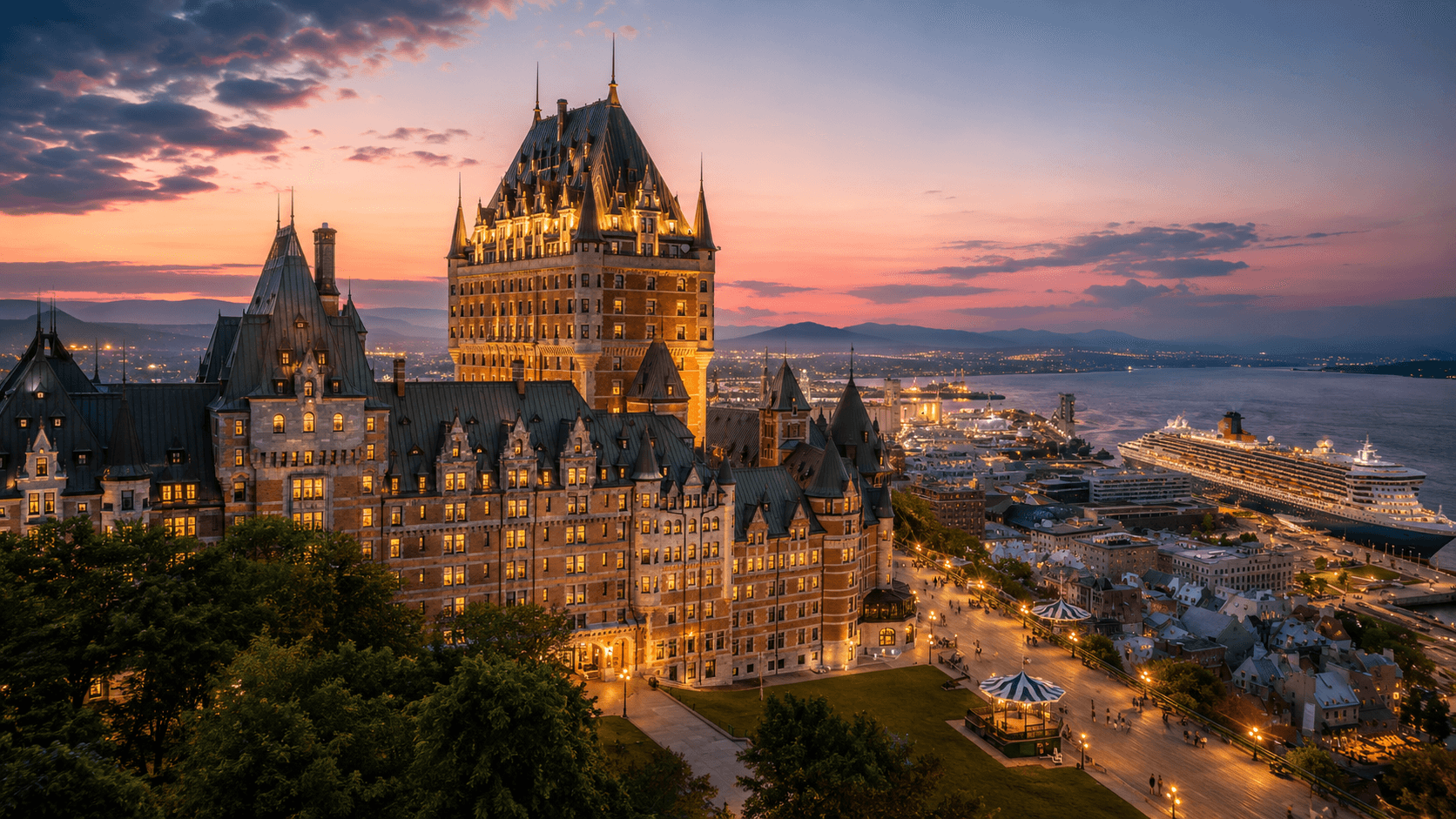
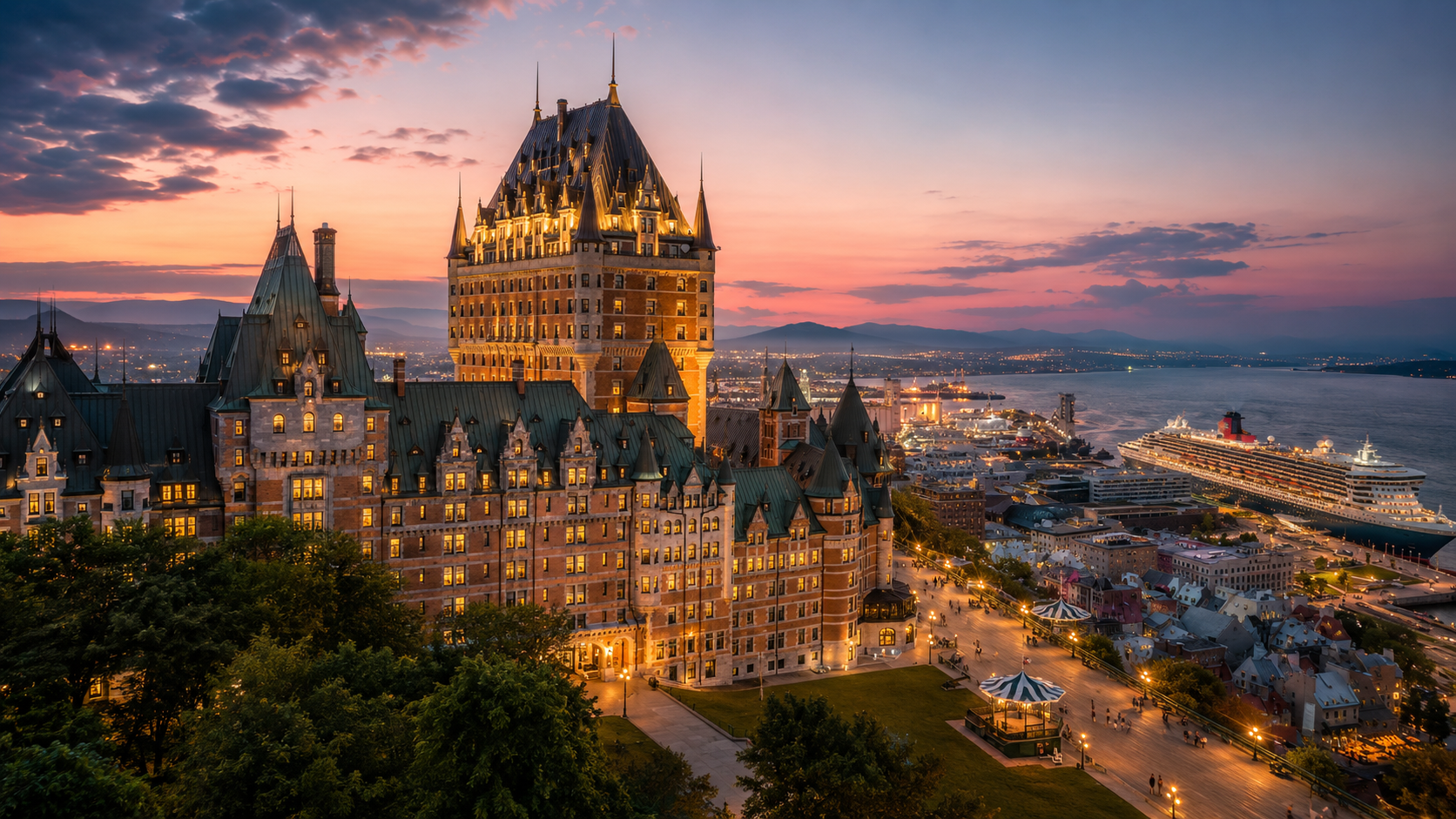
Some hotels must be located on a map. Château Frontenac announces itself before you have even found your way through Québec City.
Rising from Cap Diamant above the St. Lawrence River and Dufferin Terrace, it appears much older than it truly is. Its towers, turrets, gables and enormous copper roof suggest a French castle built to defend the city.
Yet Château Frontenac is neither a fortress from the days of New France nor the former residence of a king. It is a railway hotel, opened in the late 19th century to persuade affluent travellers to discover Canada aboard Canadian Pacific trains.
Since then, it has welcomed monarchs, presidents, prime ministers, artists and, according to legend, a few guests who never entirely left.
After Ottawa’s Château Laurier, our journey through Canada’s grand railway hotels continues in Québec City, inside what may have become the most famous of them all.
Table of Contents
- Why Château Frontenac matters
- A hotel built to create a destination
- William Van Horne and the Canadian Pacific vision
- The 1893 opening
- A château built in stages
- Why is it named Frontenac?
- The Québec Conferences
- Architecture and design
- Rooms, suites and Fairmont Gold
- Restaurants and bars
- Spa, pool and wellness centre
- Myths, legends and ghosts
- What to see inside the hotel
- What to visit nearby
- What to know before staying
- Is Château Frontenac worth it?
- The railway journey continues
Why Château Frontenac matters
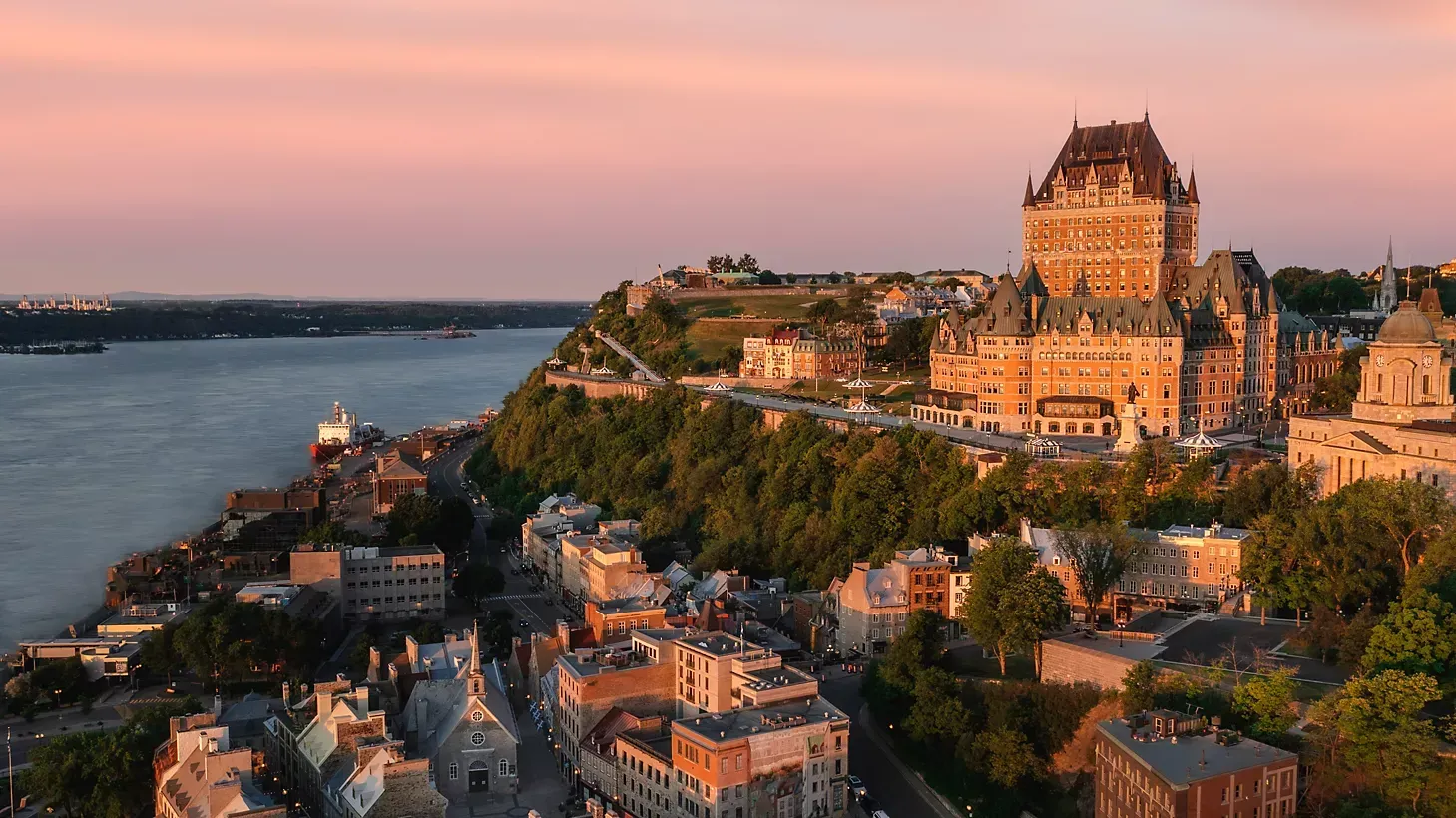
Château Frontenac is often described as the most photographed hotel in the world.
That claim is nearly impossible to verify, but it feels entirely plausible when you see the number of cameras and phones pointed toward it from Dufferin Terrace, the Québec-Lévis ferry or the Old Port.
The hotel has become the defining image of Québec City.
It appears in travel brochures, on postcards, in international campaigns and in almost every visual representation of Old Québec. Its silhouette is so closely associated with the city that many visitors assume it is a genuine castle dating from the era of New France.
The building is considerably younger.
Château Frontenac opened in 1893, more than two centuries after Samuel de Champlain founded Québec. It was built by the Canadian Pacific Railway, not to defend the city, but to develop railway tourism.
Its importance therefore extends far beyond its architecture.
The Château represents an era when Canadian railway companies did more than transport passengers. They built hotels, organized itineraries and actively shaped the image of Canada presented to the rest of the world.
In Québec City, Canadian Pacific did not choose a discreet property near a railway station. It placed its hotel on one of the most prestigious and historically significant sites in North America.
A hotel built to create a destination
At the end of the 19th century, Canadian railway companies faced a straightforward problem.
They had laid tracks across an immense country, but now needed enough passengers to fill their trains.
Freight and settler transportation remained essential, but affluent travellers represented a particularly attractive market. They could purchase first-class tickets, stay in company-owned hotels and spend money in destinations along the railway.
They still needed a reason to come.
Canadian Pacific began transforming some of the country’s most remarkable landscapes and cities into prestigious destinations. Banff received its grand hotel. Lake Louise gradually gained an establishment worthy of its setting. Québec City would receive a château.
The strategy followed an ambitious idea: if Canada could not export its scenery, it could import tourists to admire it.
Château Frontenac was designed to attract European and American travellers fascinated by Québec City’s French character, fortifications, narrow streets and spectacular position above the St. Lawrence.
A comfortable room would not be enough.
The hotel had to reinforce the impression that guests had arrived in a historic, romantic city unlike anywhere else in North America.
William Van Horne and the Canadian Pacific vision
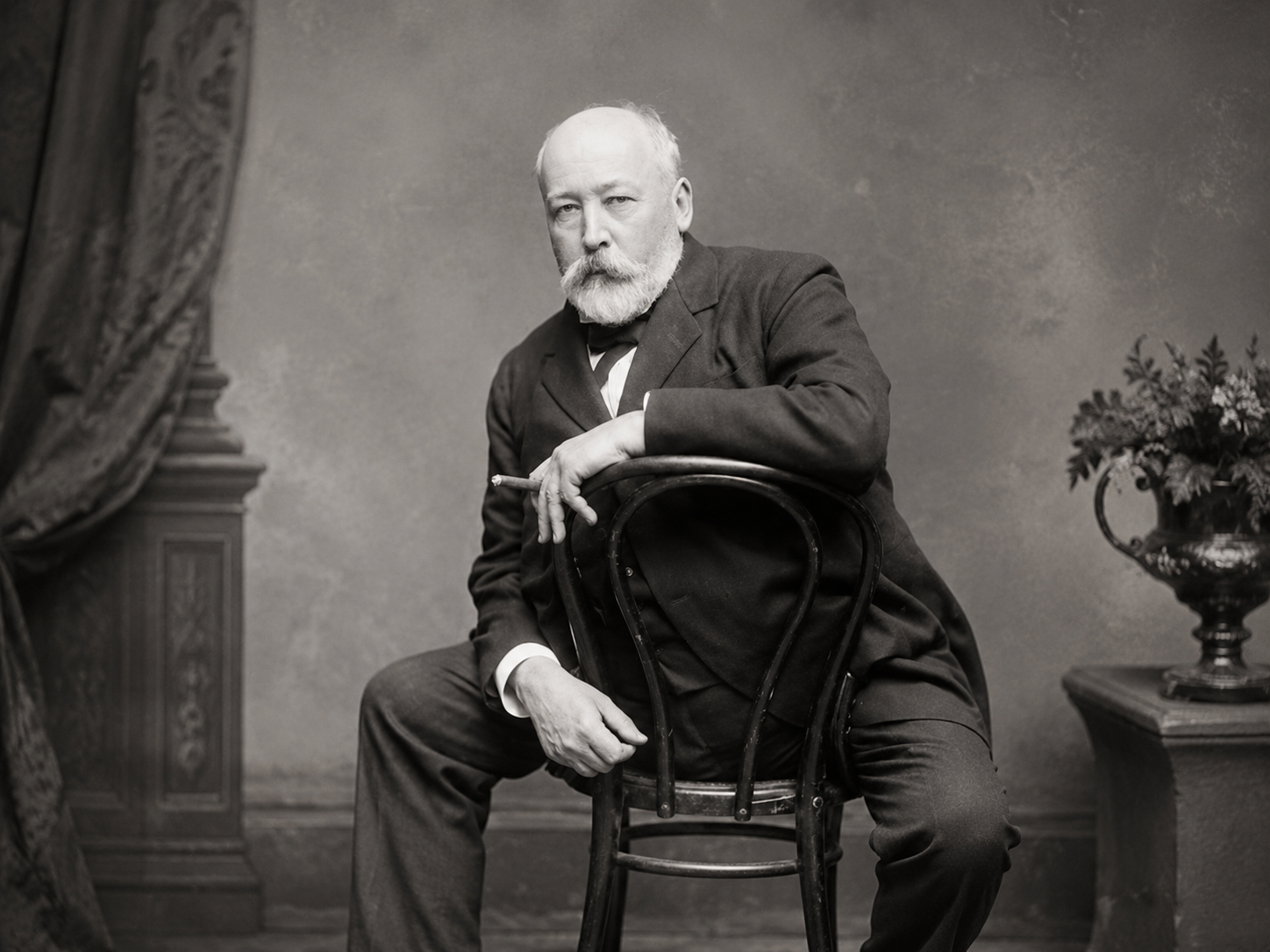
The creation of Château Frontenac is closely associated with William Cornelius Van Horne, one of the most important figures in Canadian Pacific history.
Van Horne was a railway executive, but also a man with a remarkable instinct for tourism, branding and the presentation of destinations.
He understood that the railway was selling more than transportation. It was selling the journey itself.
Under his influence, Canadian Pacific developed a collection of hotels intended to serve as natural extensions of its trains. These properties offered travellers a continuous experience, from the first-class carriage to the guest room, restaurant and lounge.
For the Québec City project, Van Horne commissioned New York architect Bruce Price.
Price had already worked on Montréal’s Windsor Station and other projects associated with Canadian Pacific. His assignment in Québec City was to design a hotel that respected the city’s historic character while meeting the modern expectations of an international clientele.
The result was not an exact reproduction of any particular French château. It combined several influences in an architectural composition that was theatrical, immediately recognizable and highly effective as a tourism symbol.
Van Horne was not trying to recreate history with archaeological precision.
He wanted to create an image powerful enough to make people board the train.
More than 130 years later, it would be difficult to argue that the strategy failed.
The 1893 opening
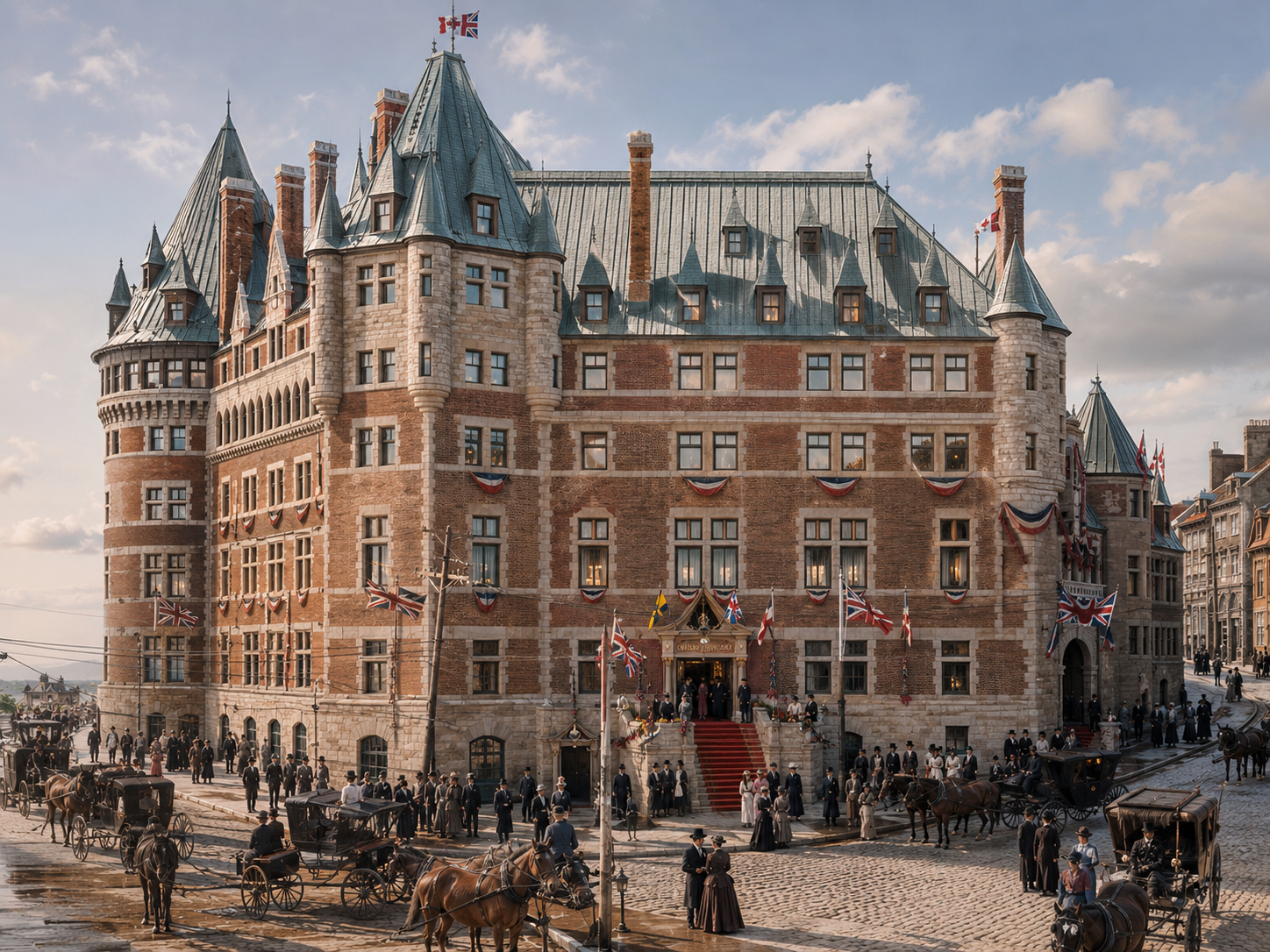
The first section of Château Frontenac officially opened on December 18, 1893.
The hotel originally contained 170 rooms. Of these, 93 had a private bathroom and fireplace, remarkable luxuries for the period.
From the beginning, the Château offered an experience very different from the smaller inns and hotels that had traditionally accommodated visitors to Québec City.
The property featured spacious lounges, an elegant dining room, refined service and spectacular views of the St. Lawrence River.
Its position at the top of Cap Diamant also transformed arrival into a carefully staged experience.
Travellers encountered the fortifications, the narrow streets of the Upper Town, Dufferin Terrace and the river before entering a building that seemed to continue the city’s history.
Château Frontenac was not Canadian Pacific’s first railway hotel, but it quickly became one of its most recognizable.
Its success led to several expansions. The château we know today was not constructed all at once.
A château built in stages
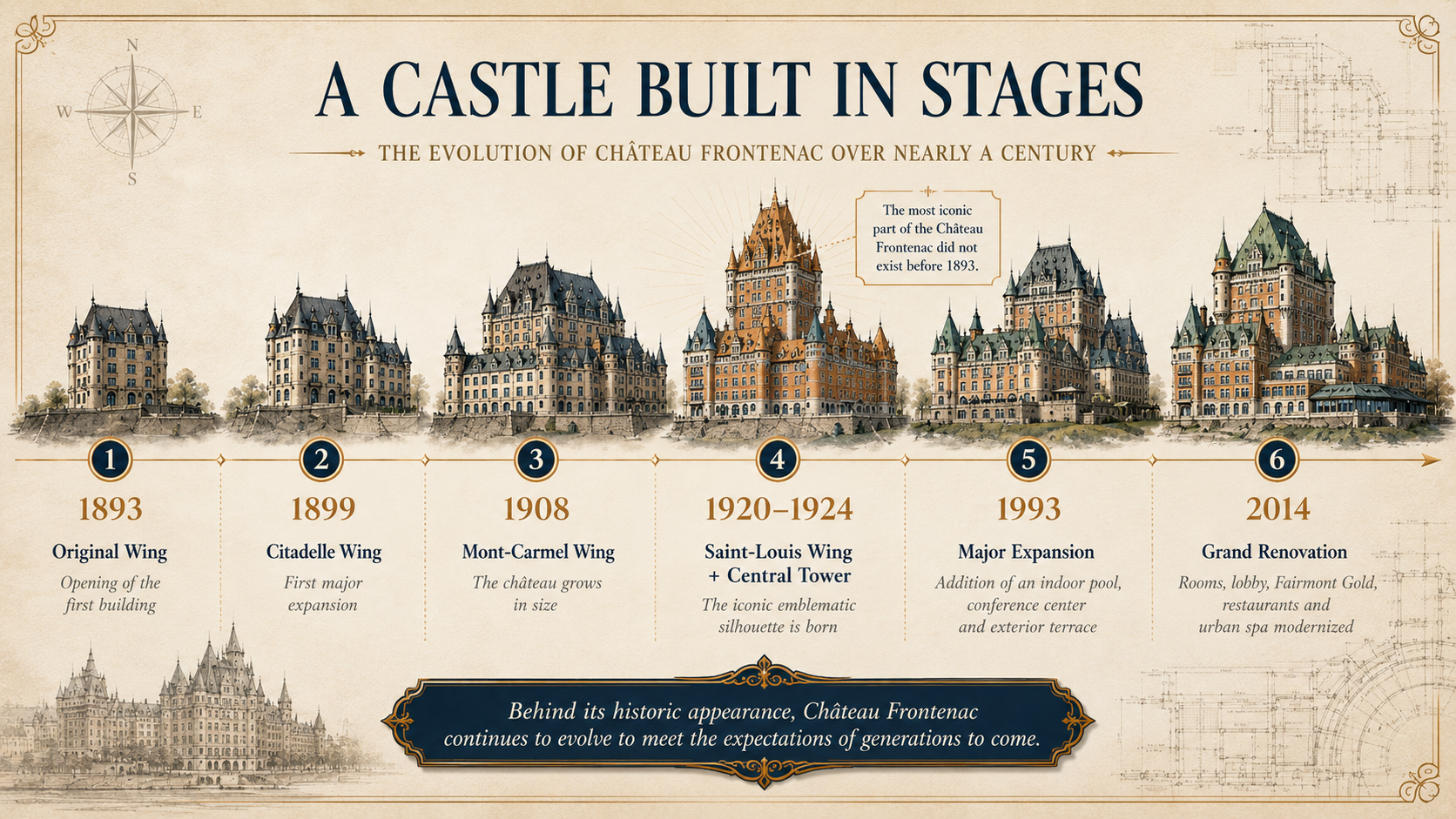
The current appearance of Château Frontenac is the result of several construction campaigns spread over nearly a century.
The original wing opened in 1893.
The Citadel Wing was added in 1899, followed by the Mont-Carmel Wing in 1908. The Saint-Louis Wing and the imposing central tower were constructed between 1920 and 1924.
That tower, with its steep copper roof and silhouette visible from far beyond Old Québec, became the hotel’s most recognizable architectural feature.
Interestingly, the part of the Château that visitors most strongly associate with the building did not yet exist when the hotel opened.
A final major expansion was completed in 1993. It added an indoor swimming pool, fitness centre and outdoor terrace.
In 2014, an extensive renovation transformed the guest rooms, lobby, Fairmont Gold floors, reception spaces and dining program. An urban spa was also introduced.
The Château has therefore continued to evolve.
Behind its historic appearance is a hotel that has adapted its services to the expectations of several generations, moving from the fireplaces and private bathrooms of 1893 to contemporary spas, pools, fitness facilities and culinary experiences.
Why is it named Frontenac?
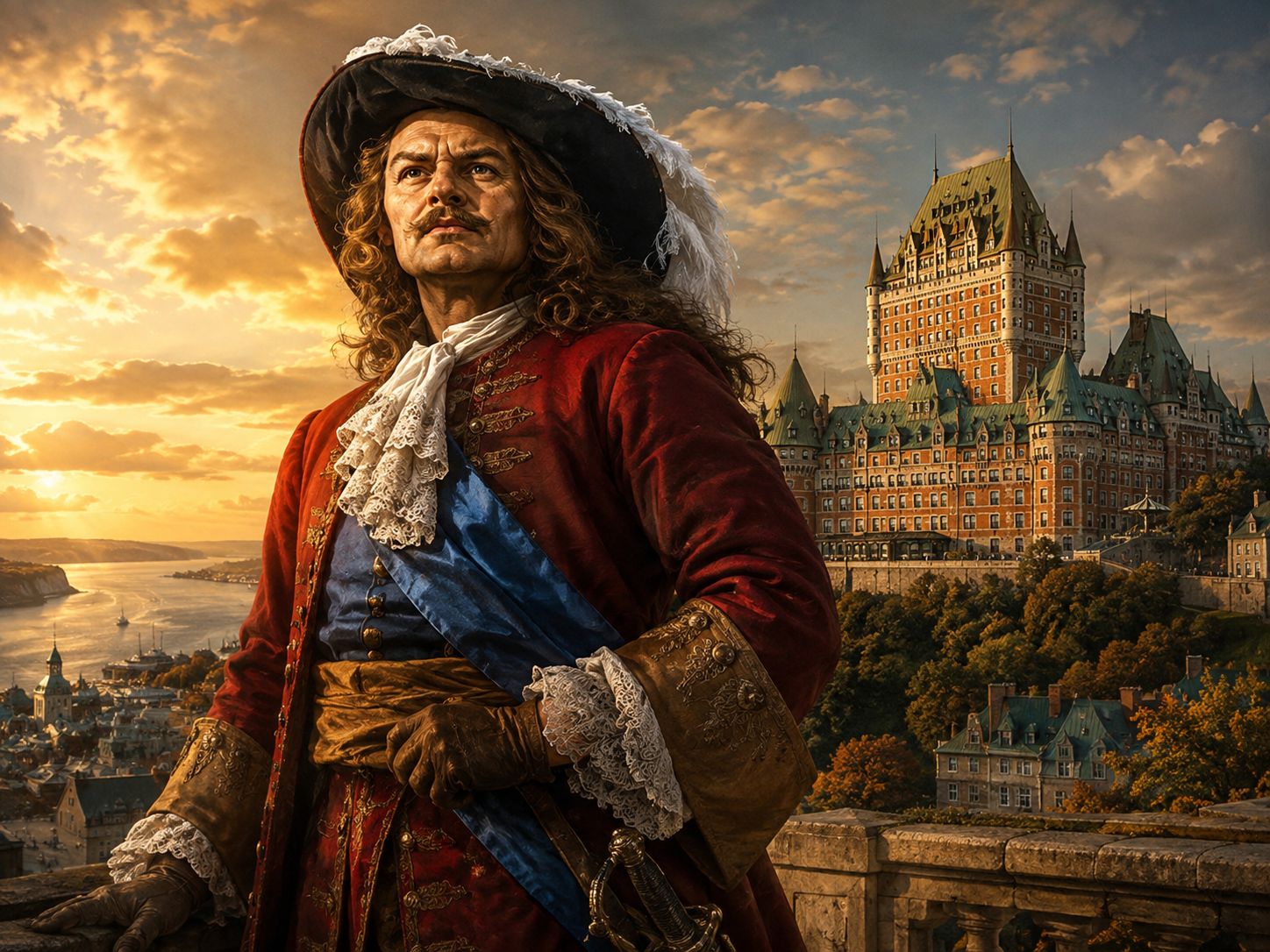
The Château is named after Louis de Buade, Comte de Frontenac, who served twice as governor general of New France during the 17th century.
Frontenac remains one of the best-known and most controversial figures in the colonial history of French North America.
He is especially associated with the defence of Québec against William Phips and the English forces in 1690.
When Phips demanded that the city surrender, Frontenac reportedly replied that he had no answer to give except through the mouths of his cannons and muskets.
The exact words were probably polished by history, but the response helped establish Frontenac as a symbol of resistance and authority.
The hotel site already had a direct connection with the governors of New France.
The Château Saint-Louis, the official residence of the French and later British governors, once stood immediately nearby. Its archaeological remains are still preserved beneath Dufferin Terrace and can be visited.
Château Frontenac was therefore not built on a site selected only for its view.
It occupied a place where colonial, military and political power had been exercised for centuries.
The name allowed the new railway hotel to associate itself immediately with that history.
The Québec Conferences
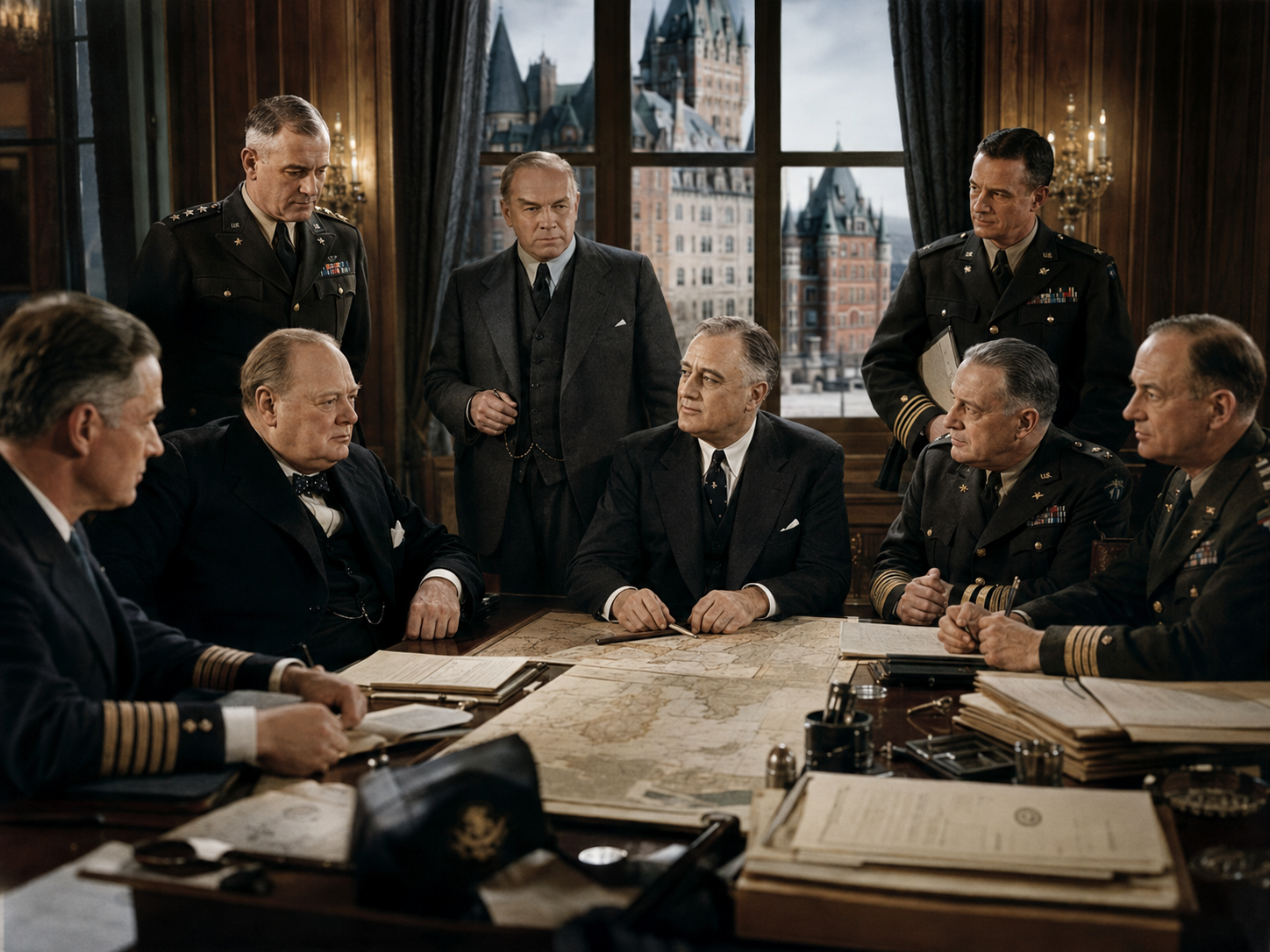
Château Frontenac played an important role during the Second World War.
In August 1943, Québec City hosted a secret Allied conference known by the code name Quadrant.
British Prime Minister Winston Churchill and United States President Franklin D. Roosevelt met their senior military advisers in Québec City. Canadian Prime Minister William Lyon Mackenzie King served as host.
Meetings took place at Château Frontenac and the Citadelle of Québec.
Discussions covered Allied strategy, the Pacific War, operations against Germany and preparations for the next stages of the conflict.
A second conference, code-named Octagon, took place in September 1944. Churchill and Roosevelt returned to Québec City to discuss matters including the continuing war against Japan and the future of Germany after its defeat.
For the duration of these conferences, the Château became an international strategic centre.
Decisions discussed behind its walls would influence the end of the war and the political balance of the postwar world.
Photographs of Roosevelt, Churchill and Mackenzie King in front of the Château became some of the most famous historical images associated with the hotel.
The reality is somewhat more nuanced than certain tourism stories suggest.
It is sometimes claimed that the Normandy landings were planned entirely inside a room at Château Frontenac. The Québec Conferences did contribute to Allied strategy and preparations for future operations, but a military campaign of such complexity was obviously not conceived by a few leaders around a single hotel table.
The documented history is impressive enough without turning it into a movie scene.
Architecture and design
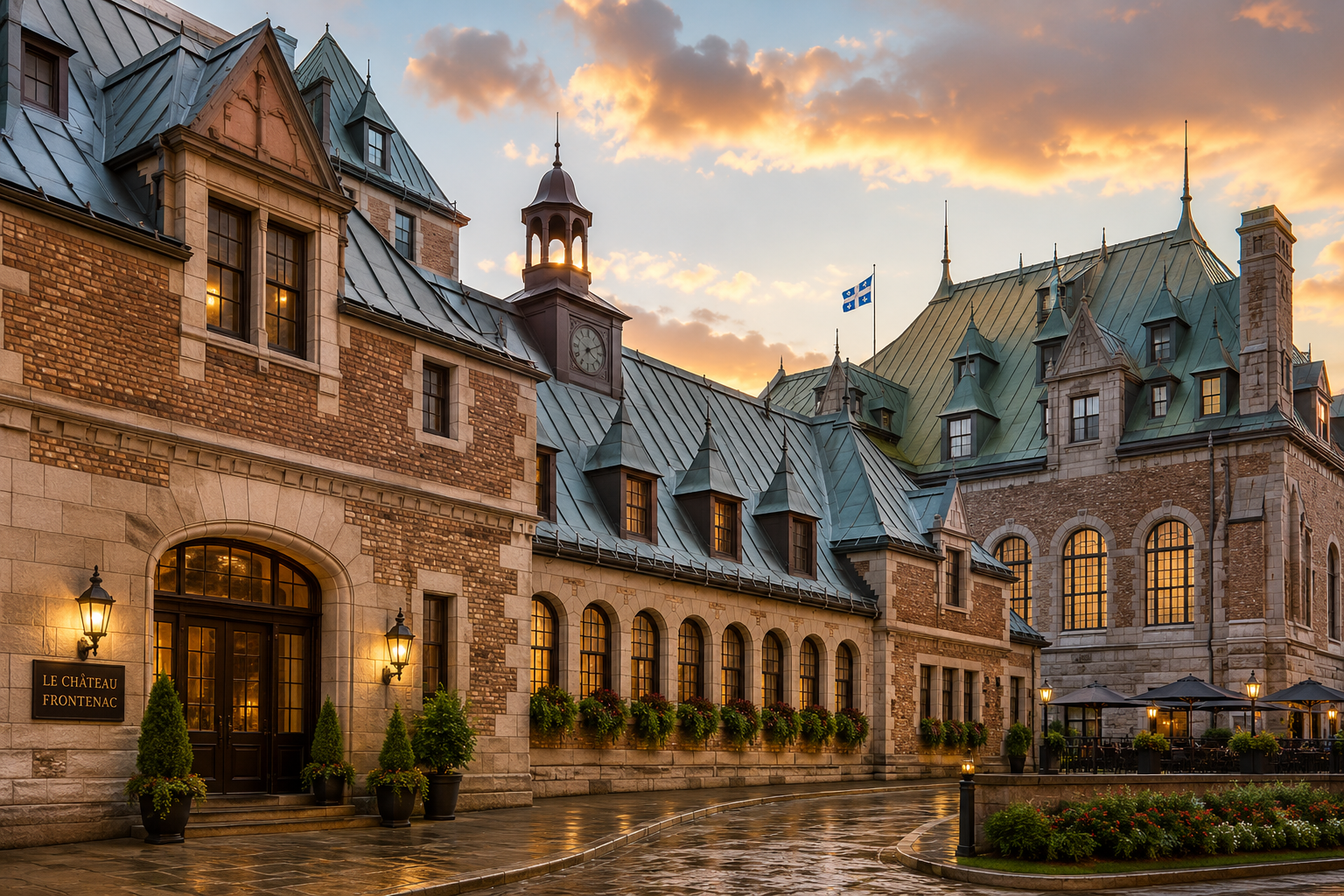
Château Frontenac is one of Canada’s most famous examples of the Château architectural style.
The style draws loosely from French Renaissance châteaux and medieval traditions. It is characterized by steep roofs, towers, turrets, gables, dormer windows and an intentionally irregular silhouette.
The building uses primarily brick and stone, crowned by its famous copper roofs, which have turned green through oxidation.
Its elevated position significantly increases its visual impact.
The Château does not simply appear to be located in Old Québec. It seems to form its summit.
Inside, the experience depends on the contrast between historic grandeur and contemporary interventions.
Decorative ceilings, woodwork, chandeliers, corridors and architectural details recall different periods in the hotel’s evolution. More recent renovations introduced contemporary design into the rooms, restaurants and some public spaces.
As at Château Laurier, the configuration of a historic hotel does not always match contemporary expectations.
Corridors can be long, certain rooms are smaller than expected and floor plans vary from one section to another.
That diversity is part of the property’s character.
A perfectly standardized château would quickly begin to feel like an ordinary hotel wearing a historic costume.
Rooms, suites and Fairmont Gold
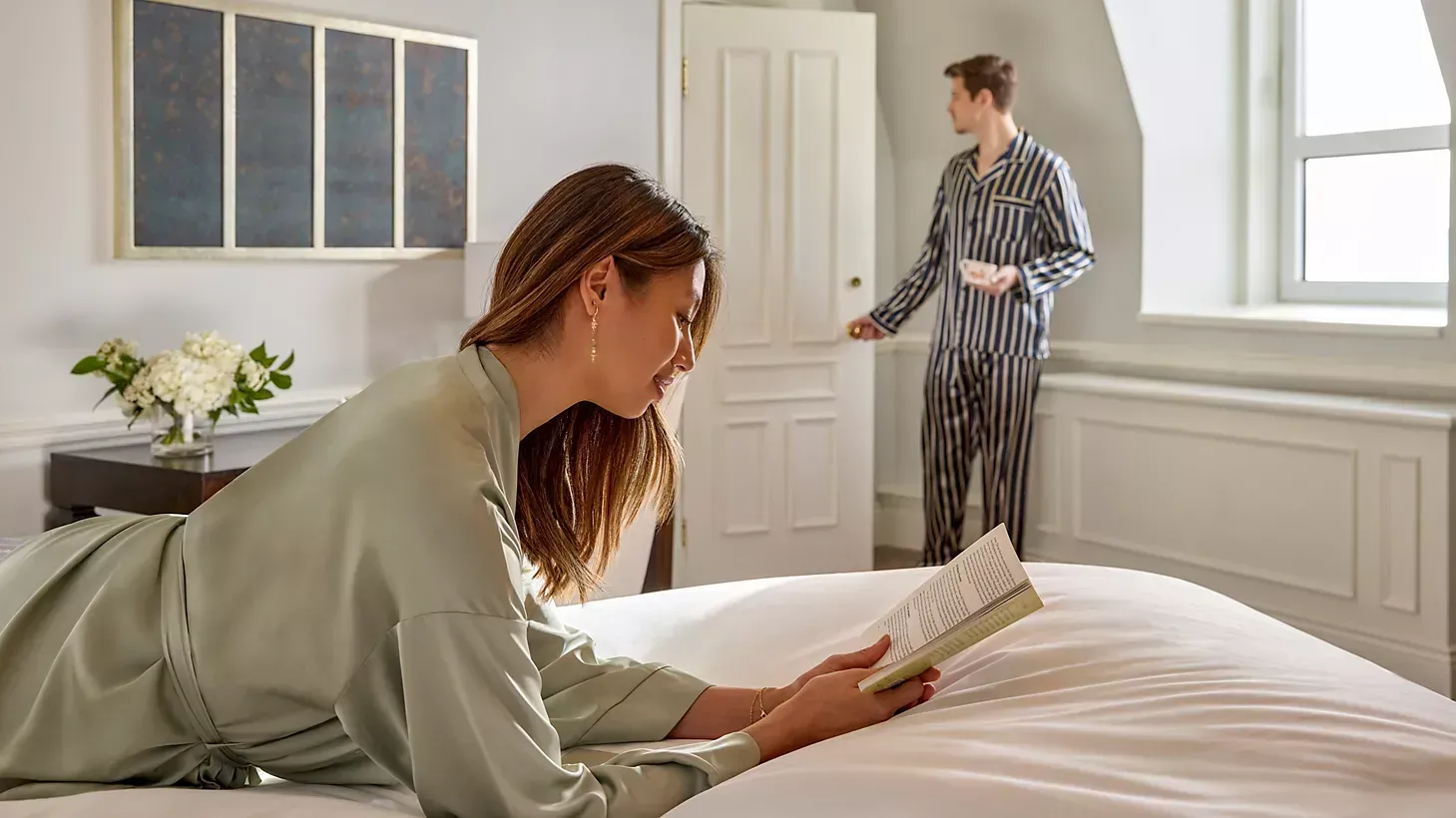
Château Frontenac now offers more than 600 rooms and suites distributed among several wings.
Fairmont rooms form the entry category. Their dimensions and layouts vary according to their location within the building.
Some overlook the streets and rooftops of Old Québec. Others face the St. Lawrence River, Dufferin Terrace or the surrounding landscape.
Choosing the view can transform the experience.
A river-facing room allows guests to watch ships, the Québec-Lévis ferry, changing light and, during winter, ice moving across the St. Lawrence. A room facing Old Québec offers a more intimate perspective over rooftops, church towers and historic streets.
Deluxe and Signature rooms generally provide additional space or a distinctive location.
Some suites are named after figures connected with the Château’s history, including Churchill, Roosevelt and Van Horne. The hotel also has a Céline Dion Suite.
Travellers seeking a more exclusive experience can choose Fairmont Gold.
This concept functions as a hotel within the hotel. It includes private check-in, personalized service and access to a lounge reserved for Fairmont Gold guests.
Breakfast, refreshments and evening canapés are generally served in the lounge.
Fairmont Gold can be a worthwhile upgrade for a short stay, especially when guests plan to enjoy the Château rather than use it solely as a base for exploring the city.
For many travellers, the best strategy is to choose a room with an excellent view rather than simply booking the largest available category.
At Château Frontenac, the landscape is part of the room.
Restaurants and bars
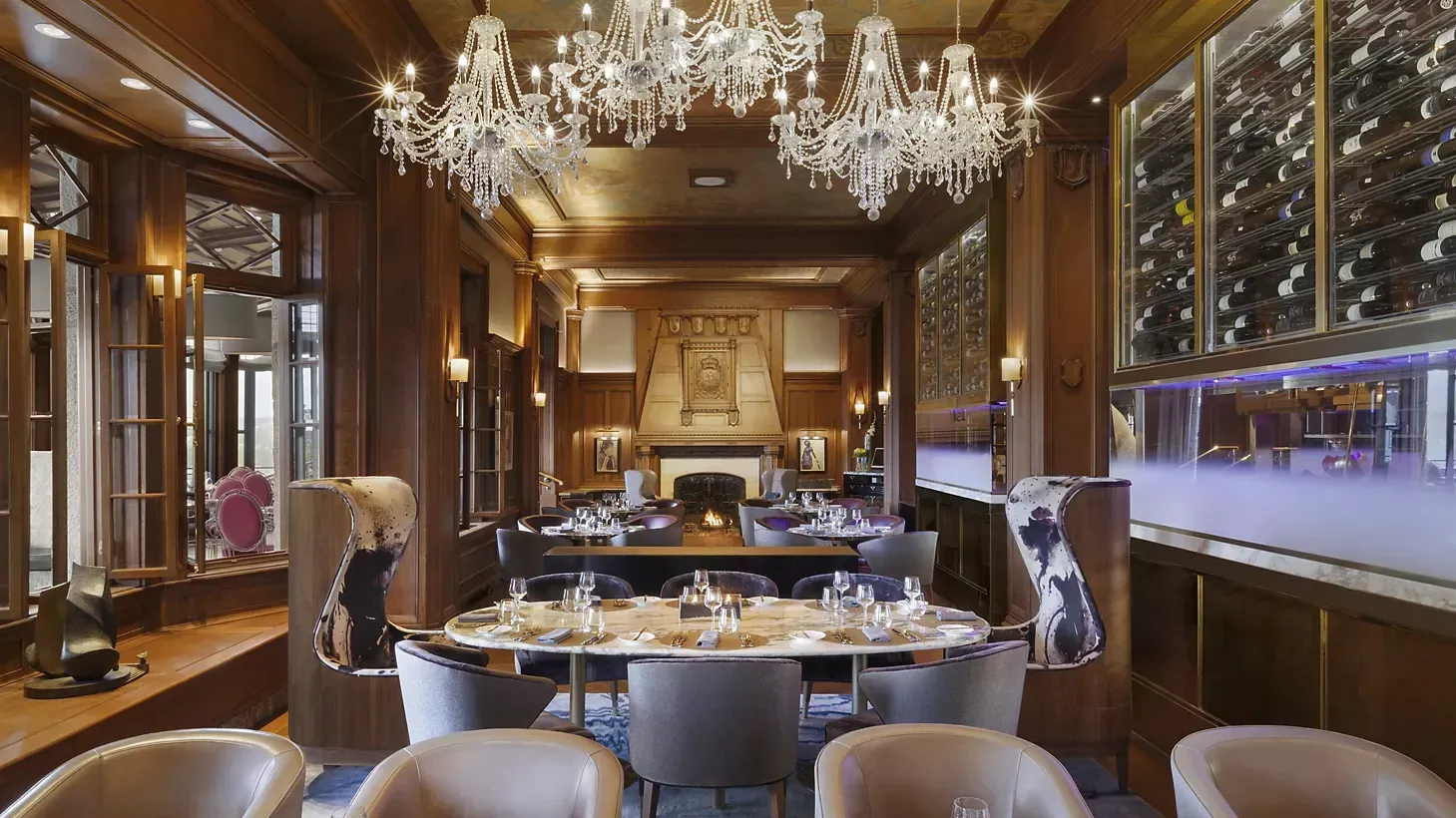
Château Frontenac is as much a culinary destination as it is a hotel.
Champlain Restaurant
Champlain is the Château’s principal fine-dining experience.
It serves contemporary French cuisine featuring Québec ingredients. The room combines historic elements with a more current presentation.
The restaurant was selected for the 2026 MICHELIN Guide Québec. It is also known for its wine cellar, extensive wine program and Sunday brunch.
Reservations are strongly recommended.
Bistro Le SAM
Bistro Le SAM provides a more relaxed atmosphere.
Its name honours Samuel de Champlain, the founder of Québec City. The menu includes contemporary bistro dishes, shareable plates, Québec cheeses and local charcuterie.
Its glass roof and views of the St. Lawrence make it one of the most enjoyable spaces in the Château, particularly around sunset.
1608 Bar
The 1608 Bar takes its name from the year Québec City was founded.
Its circular brass bar, marble counter, fireplaces and cocktails create an atmosphere more intimate than the main lobby.
The bar also highlights cheeses and charcuterie from Québec. Reservations are not normally accepted, so guests may need to wait during popular periods.
Place Dufferin
Place Dufferin primarily serves breakfast in an elegant setting with remarkable views of the St. Lawrence.
Even travellers who do not dine at the Château’s fine-dining restaurant should consider having at least one meal or drink inside the hotel. It provides a better understanding of the property than simply walking through the lobby.
Spa, pool and wellness centre
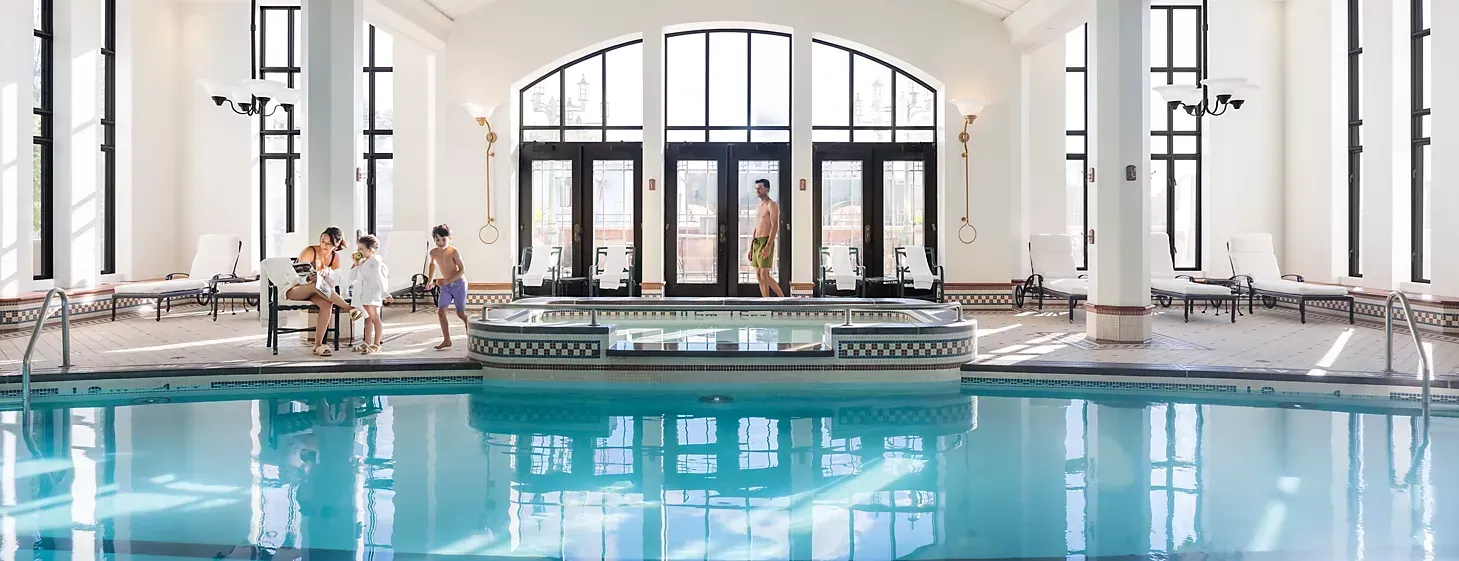
Château Frontenac has a complete wellness centre.
Its heated indoor pool is surrounded by windows that allow abundant natural light into the space. The aquatic centre also includes a whirlpool and a dedicated swimming lane.
The women’s changing area offers a steam room, while the men’s changing area has a dry sauna.
The fitness centre is open around the clock and includes modern exercise equipment. Part of the facility overlooks the sixth-floor terrace.
Moment Spa Le Château Frontenac offers massages, body treatments, beauty services, manicures and pedicures. Tandem massages are also available.
These facilities distinguish the Château from many other historic hotels.
Guests can enjoy a genuine urban resort experience while staying in the heart of Old Québec.
The pool is especially useful for families and during winter, when snow, wind and cold temperatures make returning to the Château even more appealing.
Myths, legends and ghosts
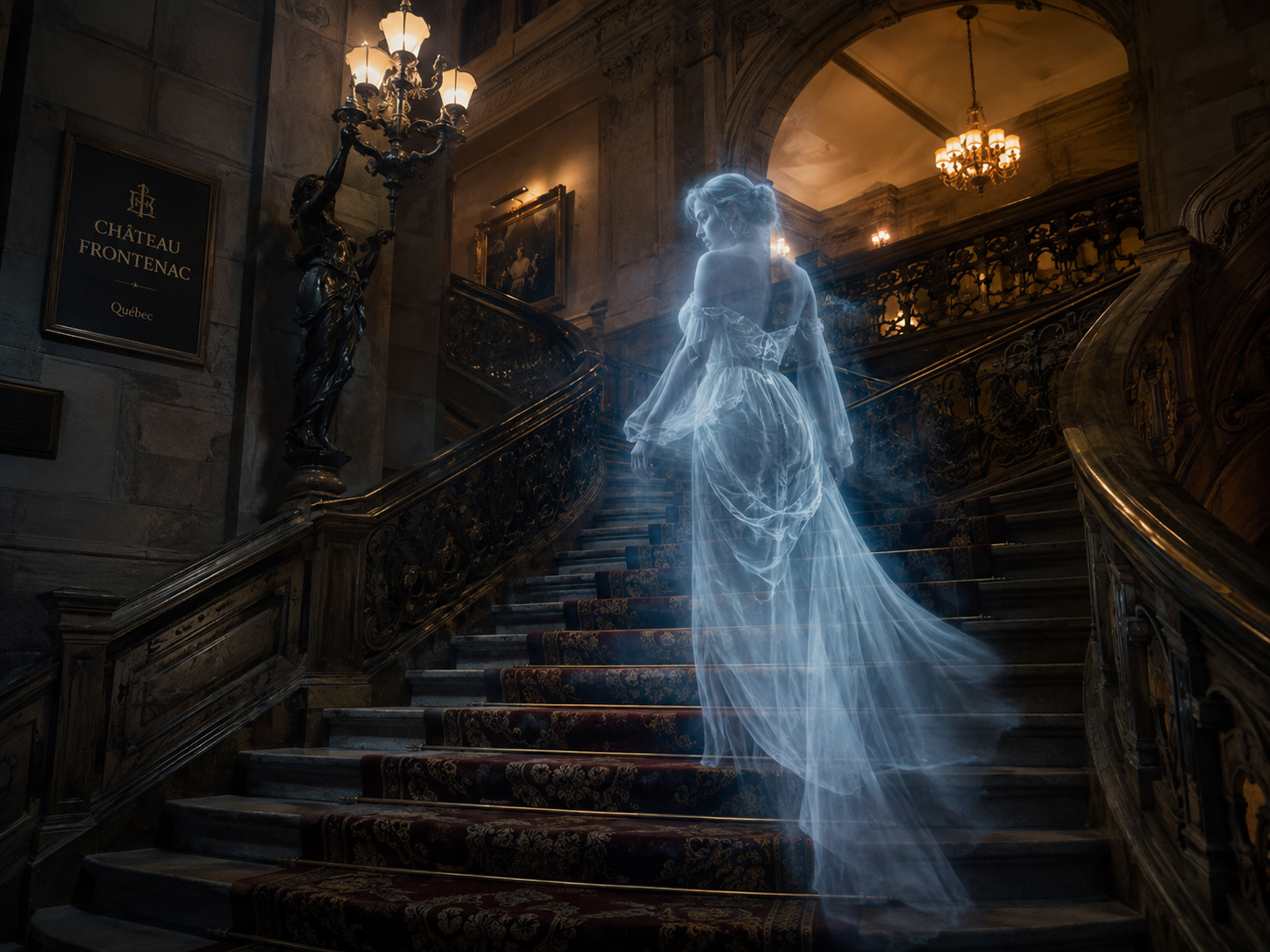
Like any respectable château, Frontenac appears to have a few residents who do not show up in the official guest register.
The most famous ghost is said to be Louis de Buade de Frontenac himself.
According to certain versions of the legend, the former governor was separated from the woman he loved and continues to wander the property in the hope of finding her.
Visitors claim to have seen a man dressed in 17th-century clothing in the corridors, near staircases and in some of the older sections of the building.
The legend has a few historical problems.
Frontenac died in 1698, almost two centuries before the present hotel was constructed. He would instead have spent his final days at Château Saint-Louis, the governor’s residence that once stood on the site.
The woman associated with the story was not his fiancée, as certain versions suggest. Frontenac was married to Anne de La Grange-Trianon, who remained mainly in France and did not share his life in New France.
If Frontenac’s ghost truly exists, he would not be haunting a hotel in which he stayed. He would be returning to the location of his former residence, long after another château was built above it.
Another legend involves a woman dressed in white or wearing a nightgown.
Guests have claimed to see this figure inside their rooms or at the end of a corridor. Her identity changes depending on the version. She is sometimes described as a woman waiting for someone she loved, and sometimes as a former guest who died under unknown circumstances.
Other accounts mention footsteps, doors closing, sudden changes in temperature and elevators stopping at floors without being called.
There is, of course, no evidence confirming these stories.
The Château stands on a site occupied for centuries, in the centre of a city that has experienced wars, sieges, fires, epidemics and countless human dramas.
The hotel itself has accumulated more than 130 years of history.
In that context, a few unexplained footsteps in the middle of the night almost seem to belong on the amenities list.
What to see inside the hotel
Guests do not need to stay overnight to discover part of the Château’s history.
The main lobby
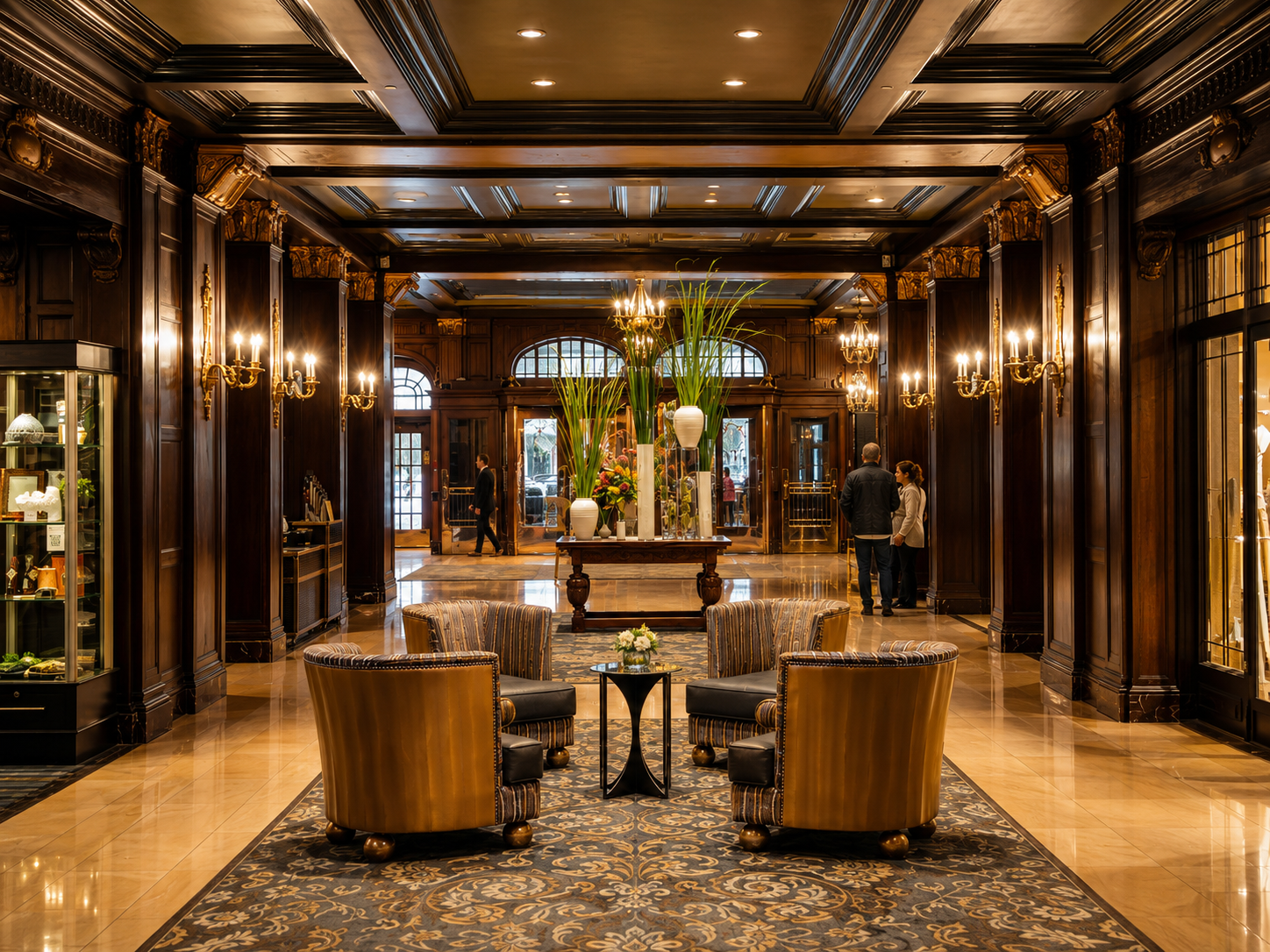
The lobby reveals the woodwork, decorative ceilings, chandeliers and architectural details that give the Château its distinctive atmosphere.
Historical objects and photographs
Photographs, artifacts and decorative elements recount different periods of the hotel’s history, including its Canadian Pacific origins and the Québec Conferences.
The restaurants and 1608 Bar
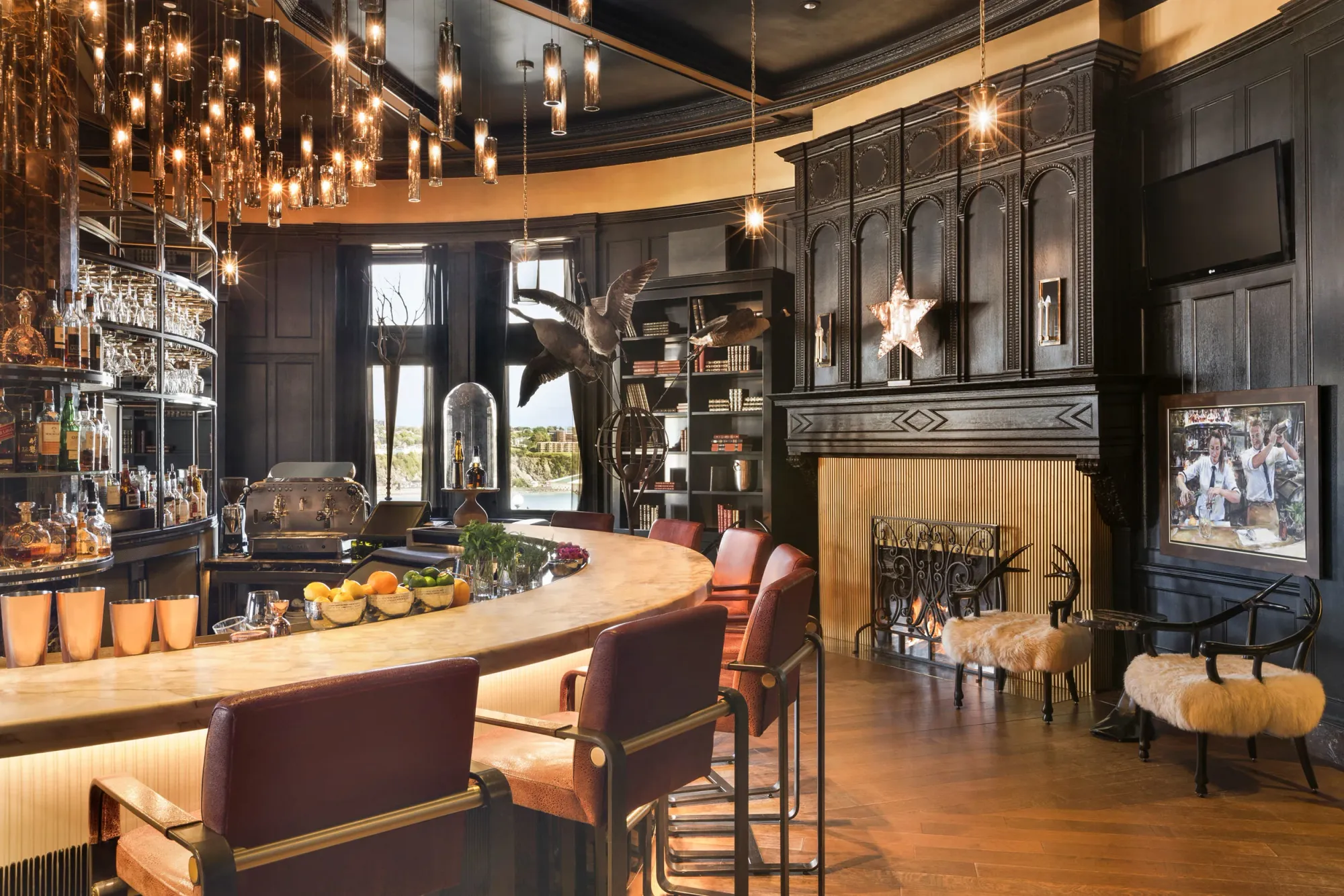
Having a drink or meal is the easiest way to experience the Château without spending the night.
Guided tours
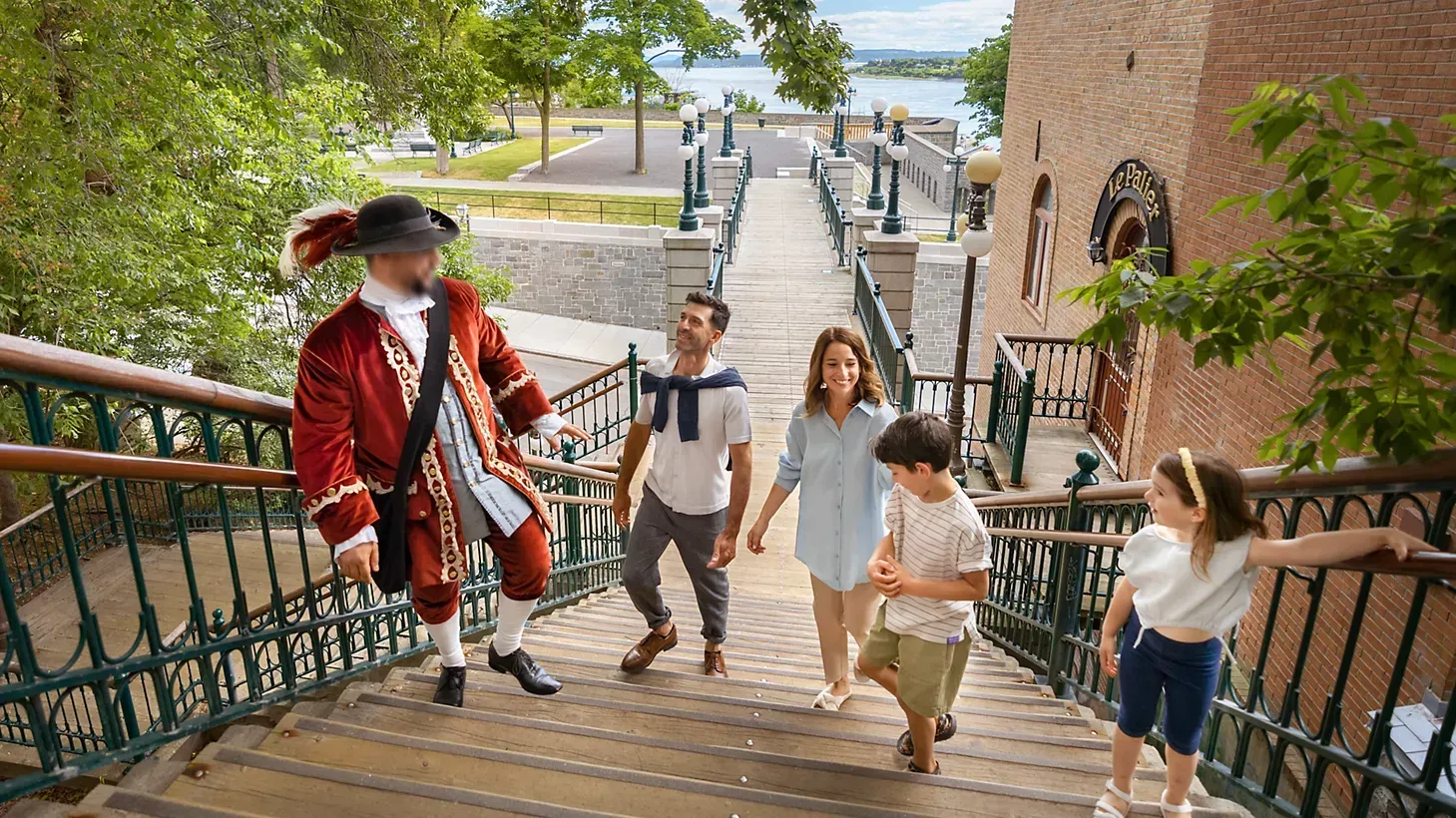
Historical tours introduce visitors to the characters, events and architectural transformations associated with the property. Some are led by guides wearing period costumes.
Tours and schedules can change, so availability should be verified before visiting.
Dufferin Terrace
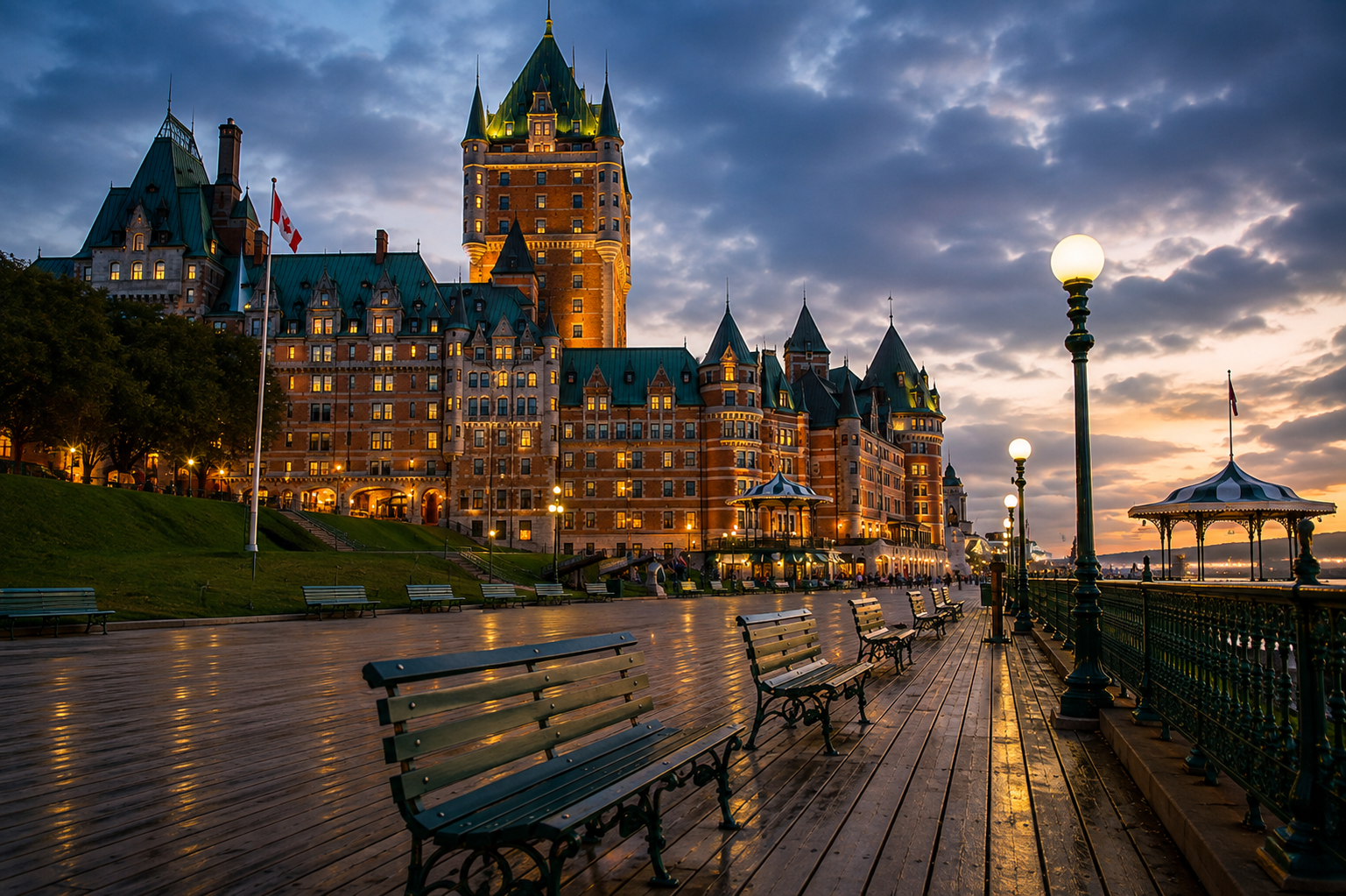
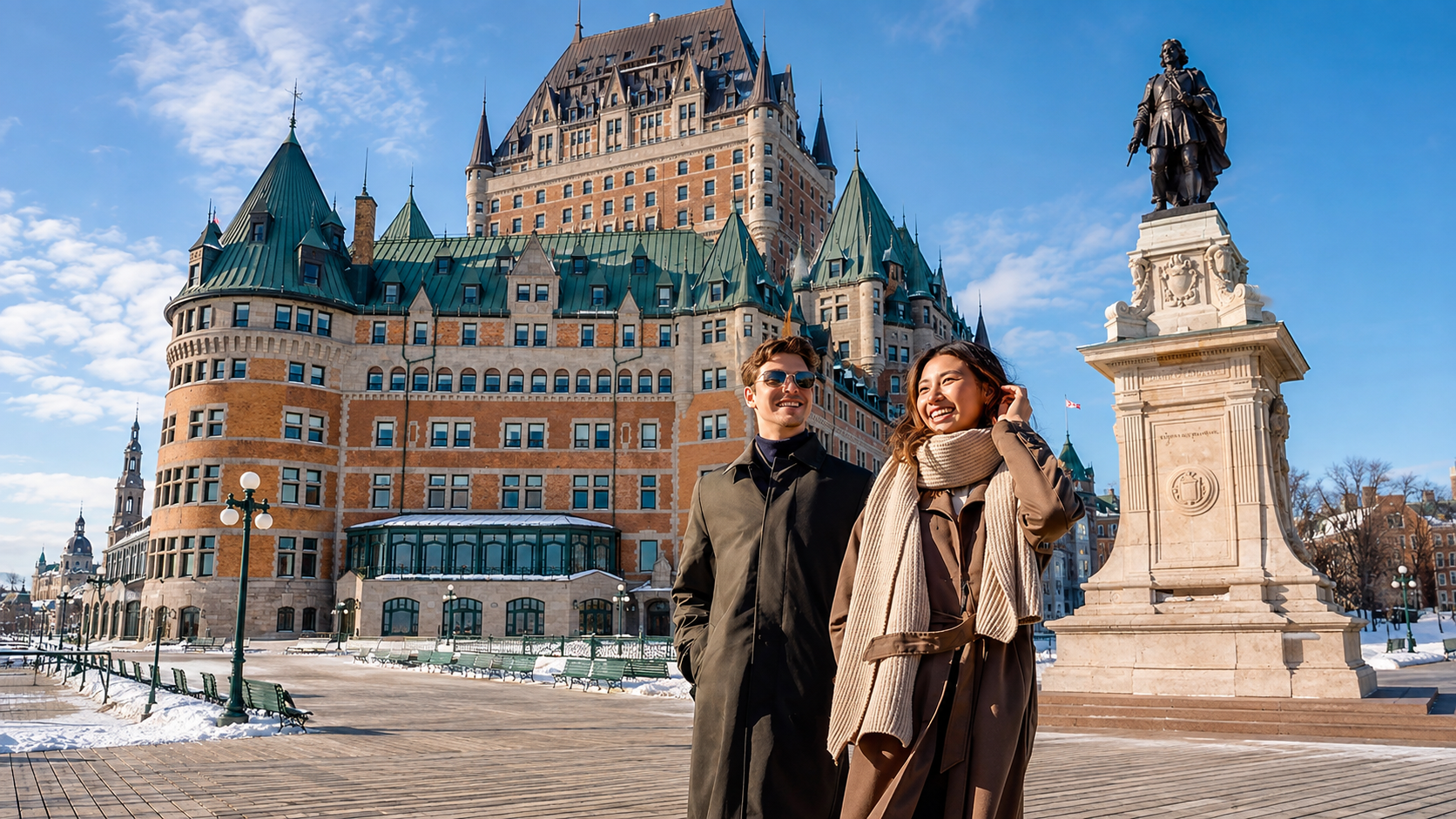
The terrace lies directly in front of the Château and offers one of Québec City’s most iconic walks.
Beneath its wooden planks are the remains of Château Saint-Louis, the former residence of the governors of New France and the British colony.
The view from Lévis
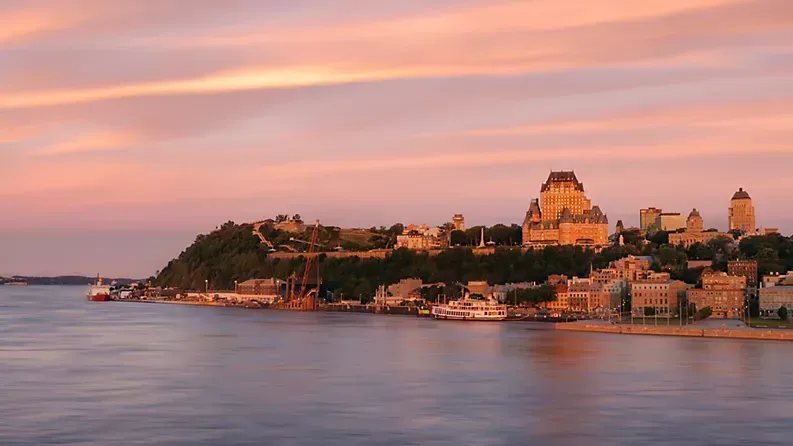
The Québec-Lévis ferry provides one of the finest views of the Château and the fortified city.
The crossing is short, relatively inexpensive and particularly beautiful around sunset or after dark.
What to visit nearby
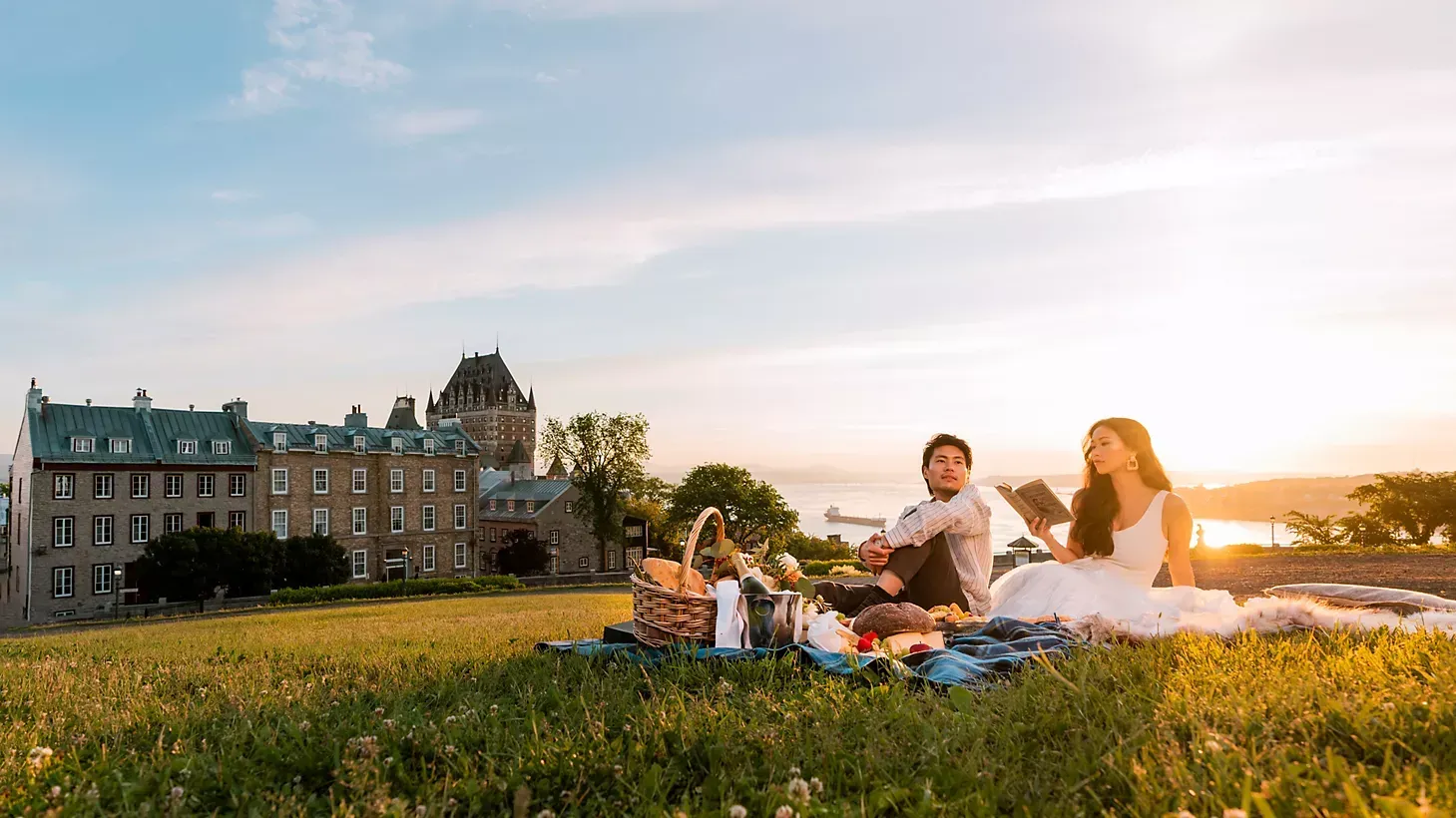
Château Frontenac’s location makes it possible to explore much of Old Québec on foot.
Dufferin Terrace
The terrace follows the top of Cap Diamant in front of the hotel and offers open views of the St. Lawrence River, Île d’Orléans and Lévis.
During winter, the Dufferin Terrace toboggan run adds a traditional experience and considerably more speed than the surrounding architecture might suggest.
Quartier Petit-Champlain
The Lower Town can be reached by funicular or by descending the Breakneck Stairs.
Petit-Champlain combines cobblestone streets, boutiques, restaurants and some of Québec City’s most photographed urban scenery.
Place Royale
Place Royale stands near the location where Samuel de Champlain established his settlement in 1608.
Its architecture helps visitors understand the city’s French origins.
The Citadelle of Québec
This active fortress dominates Cap Diamant. Guided tours explain its military history and its role as the home of the Royal 22e Régiment.
The fortifications
Québec is the only fortified city north of Mexico whose walls remain substantially preserved.
Walking along the walls and gates reveals the city’s defensive geography.
Musée de la civilisation
Located in the Lower Town, the museum presents exhibitions related to history, society, culture and major contemporary issues.
The Parliament Building
Québec’s Parliament Building is a short walk from the Château. Its architecture and gardens deserve a visit even when interior access is restricted.
The Plains of Abraham
The park commemorates the 1759 battle that profoundly changed the fate of New France.
Today, it offers trails, green spaces, cultural activities and views of the river.
What to know before staying
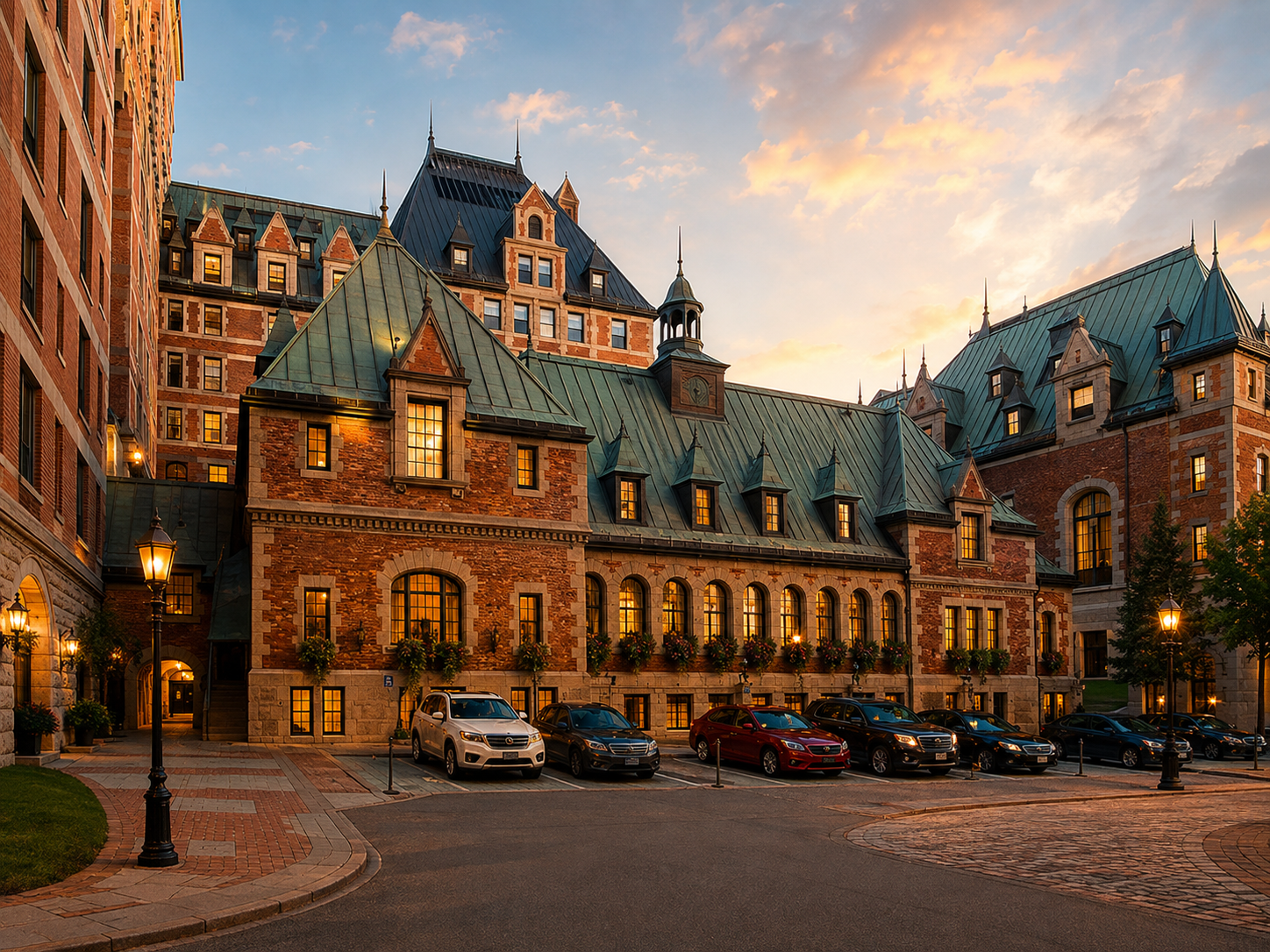
Not every room offers the same experience
Room sizes, layouts and views can vary considerably. It is important to read the exact description of the category being booked.
A river view deserves serious consideration
The price difference can be significant, but the St. Lawrence adds an extraordinary dimension to the stay.
The Château is busy
The hotel is also a tourist attraction. The lobby and public spaces can become crowded during the day.
Floors reserved for guest rooms are naturally quieter.
Parking is expensive
Valet parking is convenient but comes with an additional charge. In Old Québec, a car can quickly become more of a responsibility than an advantage.
The neighbourhood has steep streets
The Château stands in the Upper Town. Many attractions can be reached on foot, but cobblestones, stairs and elevation changes may be difficult for travellers with limited mobility.
The funicular makes travel between the Upper Town and Petit-Champlain considerably easier.
Accessible rooms are available
Travellers with specific requirements should confirm room dimensions, bathroom equipment and the route between their room and the hotel’s principal facilities.
Popular restaurants should be reserved
Champlain and certain seasonal experiences may sell out. Reservations should be made before arrival.
The Château can be visited without staying overnight
A meal, cocktail, guided tour or walk through the public spaces provides an introduction to the building.
Staying at the hotel offers a different experience, particularly early in the morning and later in the evening, once many daytime visitors have left.
Is Château Frontenac worth it?
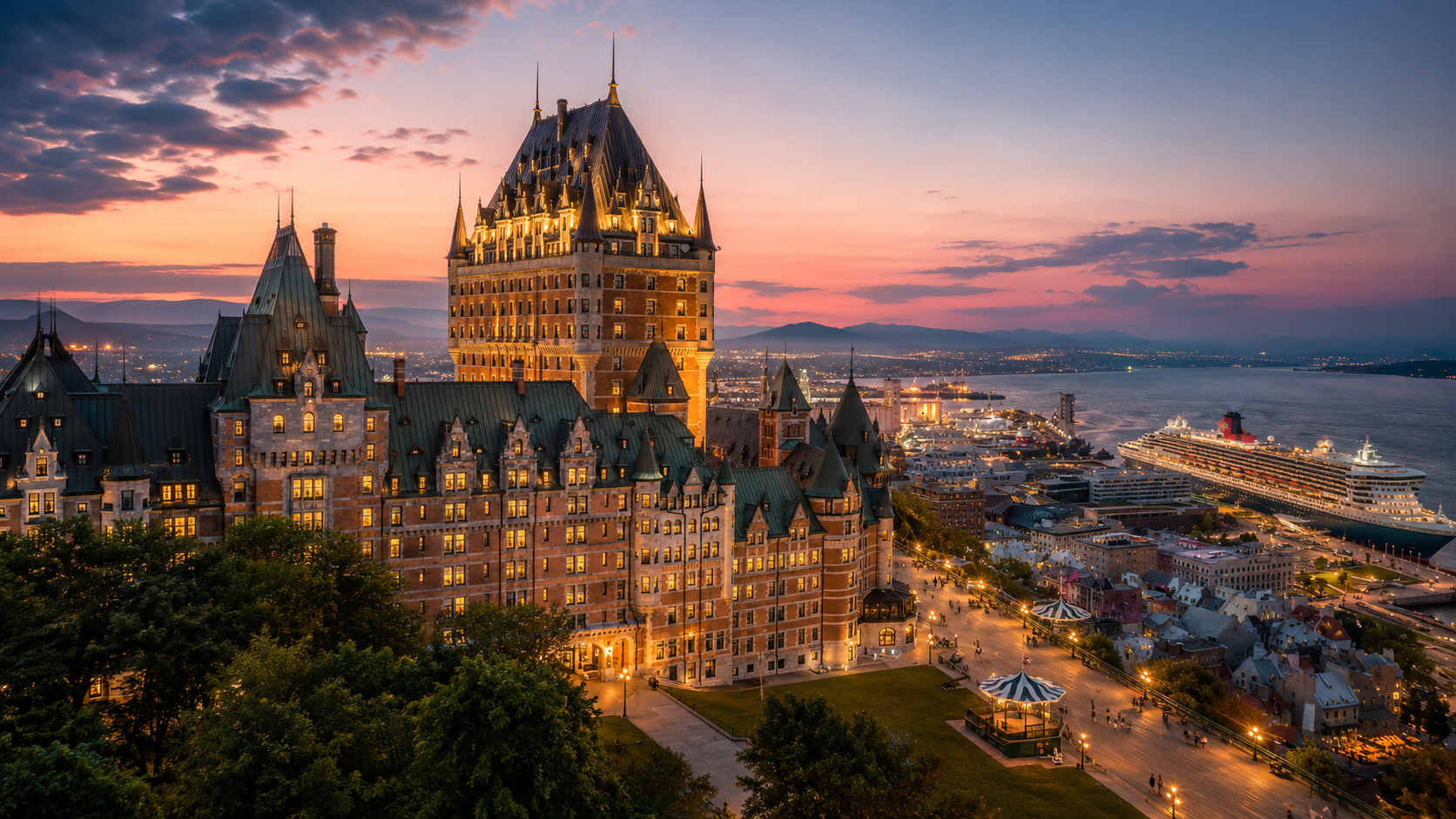
Château Frontenac is one of the rare hotels whose value cannot be measured solely by the size of the room.
Certain rooms are smaller than those found in contemporary hotels charging similar rates. Corridors can be long and the property may feel busy.
The price reflects the location, history and architecture as much as the amenities.
Travellers looking only for a comfortable room in Québec City will find excellent and less expensive alternatives.
For a first visit, a special occasion or a journey focused on Canadian heritage, however, the Château offers an experience that is difficult to reproduce elsewhere.
Waking above the St. Lawrence, walking along Dufferin Terrace before the crowds arrive, having a drink at 1608 and returning to the illuminated château after an evening in Petit-Champlain gives the trip a particular sense of coherence.
Château Frontenac is not merely located in Old Québec.
It has become the visual, historical and tourism heart of the district.
Québec City can certainly be visited without staying here. Some travellers may prefer a smaller, more intimate hotel.
Spending at least one night in the Château, however, allows guests to experience the city from inside its most famous image.
The railway journey continues
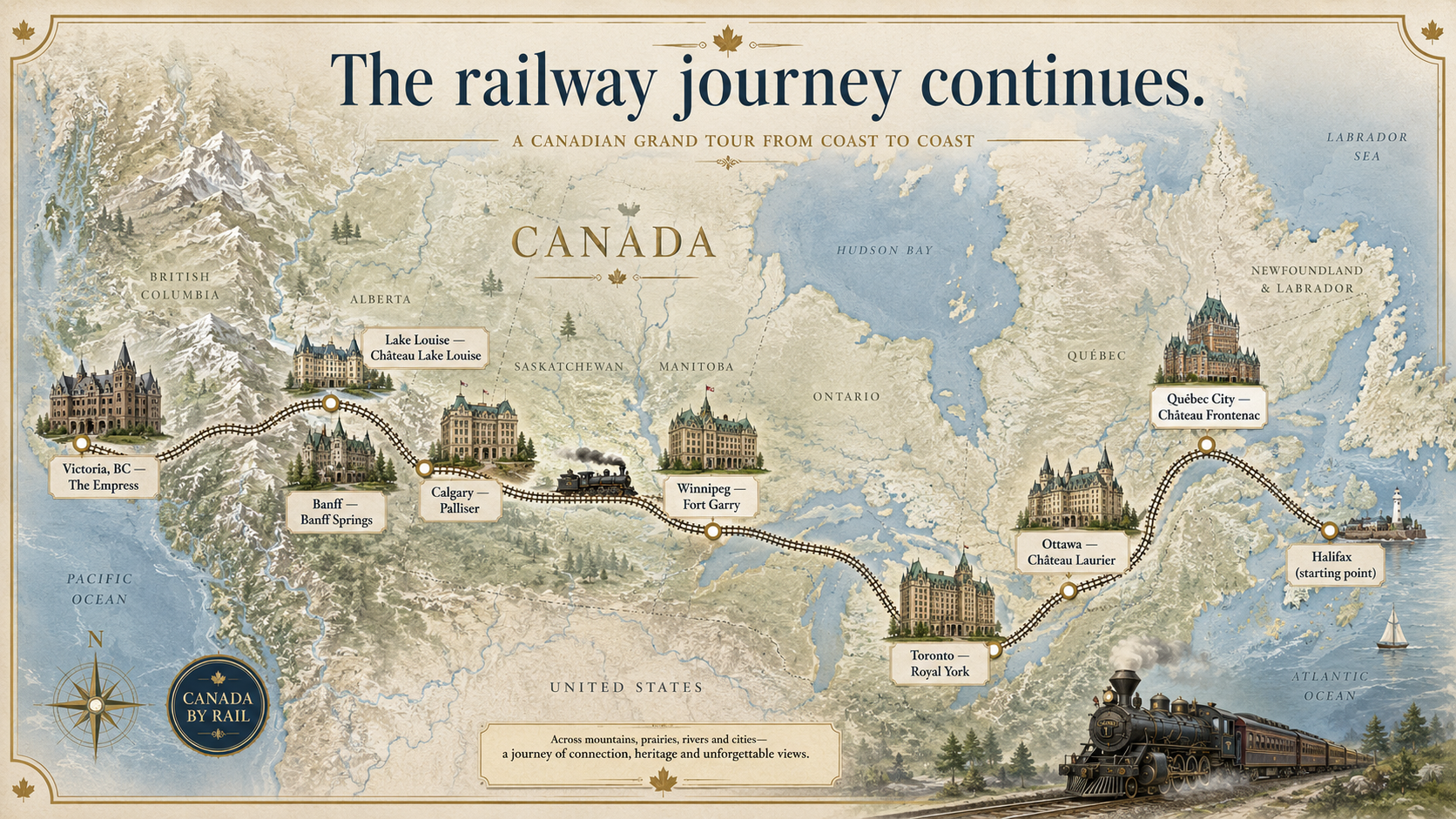
Château Frontenac and Château Laurier tell two different chapters of Canada’s railway hotel story.
In Québec City, Canadian Pacific built a hotel intended to transform a historic city into a major international destination.
In Ottawa, the Grand Trunk Railway constructed a château beside its new station, facing the centre of Canadian political power.
Both buildings use architecture inspired by France. Both dominate their surroundings. Both have welcomed figures who shaped the history of the country.
Their personalities remain distinct.
Château Laurier belongs to politics, the Rideau Canal and the tragic fate of Charles Melville Hays.
Château Frontenac belongs to the river, the fortifications, the memory of New France and Canadian Pacific’s grand presentation of Canada to the world.
From Québec City, the rails of history can carry us toward Montréal, Toronto, Winnipeg, Calgary, Banff, Lake Louise and Vancouver.
In each city, another hotel waits near the former tracks.
Some resemble castles. Others appear as urban palaces or grand mountain retreats.
Together, they tell one extraordinary story: how Canada built a country, then gave the world a reason to cross it.
Plan your stay at Fairmont Le Château Frontenac with ÆRIA Voyages
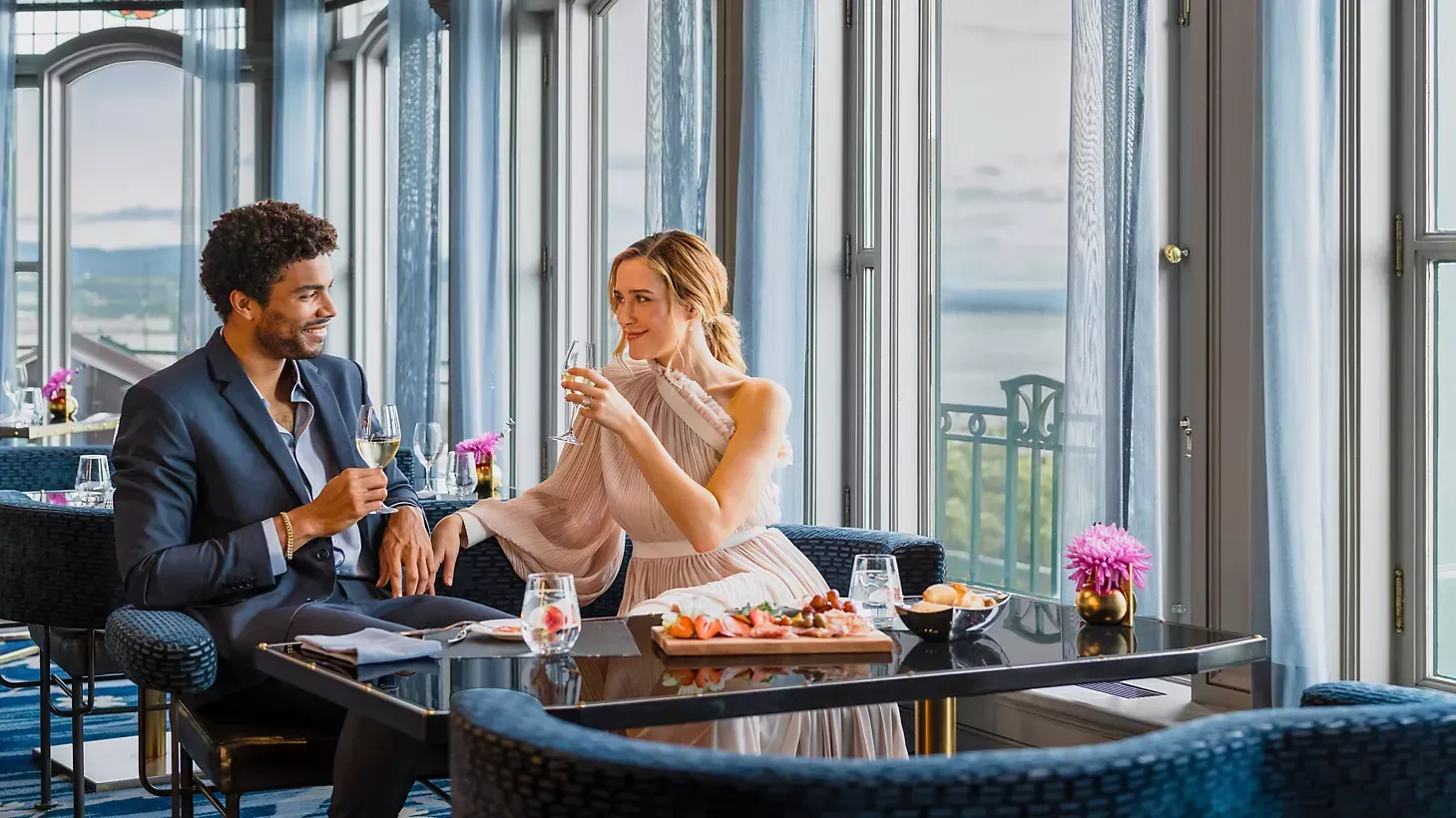
A stay at Château Frontenac can form part of a Québec City getaway, a journey aboard VIA Rail or a longer itinerary connecting Québec City, Montréal, Ottawa and Toronto.
Selecting the correct room category is especially important. A river-view room, historic suite or Fairmont Gold experience can significantly transform the stay.
The itinerary can also include Petit-Champlain, Place Royale, the Citadelle, the fortifications, the Plains of Abraham, Île d’Orléans and the Côte-de-Beaupré.
ÆRIA Voyages can arrange the accommodation, railway transportation, tours and experiences according to each traveller’s pace, interests and accessibility requirements.
Yvan Junior Blanchette
Travel & Cruise Specialist
ÆRIA Voyages
yvanblanchette@aeriavoyages.com
1-888-460-3388
aeriavoyages.com